
Photos Sans Frontiers: Mike Potthast Finds Better Living Through Technology
By Kevin Boufard, Photos by Scott Wheeler - The Ledger, Lakeland, FL
February 7, 2006
Now that professional photography with film has gone the way of the horse and buggy, Mike Potthast has positioned himself to continue the family business for another four decades.
Potthast Studios in Winter Haven went entirely digital in the late 1990s because computers give the photographer greater artistic control over the final image, Potthast said.
The transition came naturally, said his father, Bill Potthast, who started the business nearly 40 years ago.
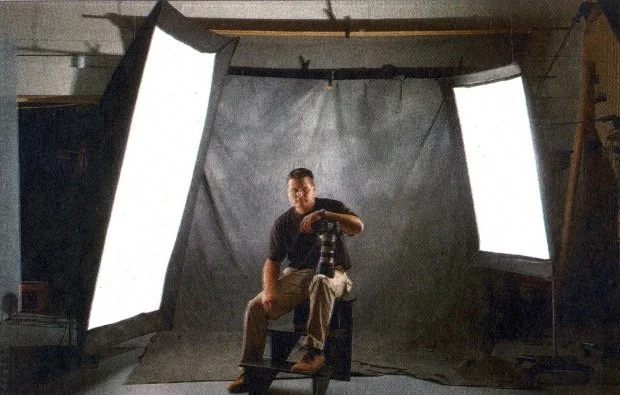
“Computers are just second nature to him,” Bill Potthast said. “He could make a computer walk around the block.”
Mike Potthast, 33, took over the family business in the late 1990s, but it’s something the precocious lad had shown talents for by age 6, his father recalled.
Both remember the time 6-year-old Mike followed his father into the darkroom, anxious to learn the almost magical art of turning a small piece of plastic film into a photograph.
Just three weeks later, his son was back in the darkroom making pictures, but this time he didn’t need his father’s help, Bill Potthast said.
“He told me, ‘Dad, you can leave now,’” Bill Potthast said. “He kicked me out of my own darkroom.”
Later, his son showed he was equally adept with cameras and computers, Bill Potthast said.
As a fifth-grader, Mike Potthast and a friend taught their classmates how to use a computer after the school got money to buy Apples, then found the teachers didn’t know how to use them, he said.
The younger Potthast also wrote his father a program to manage his darkroom schedule.
The downside of digital photography is that, while it allows for more control of the final product, it also creates more work for the photographer, Mike Potthast said.
Film photography involved “re-touching” the negative to eliminate blemishes and other minor flaws that detracted from the perfect picture, he said.
Lab technicians did most of that tedious work, but manipulating an image on a computer requires the photographer’s eye, Mike Potthast said. That can take hours.
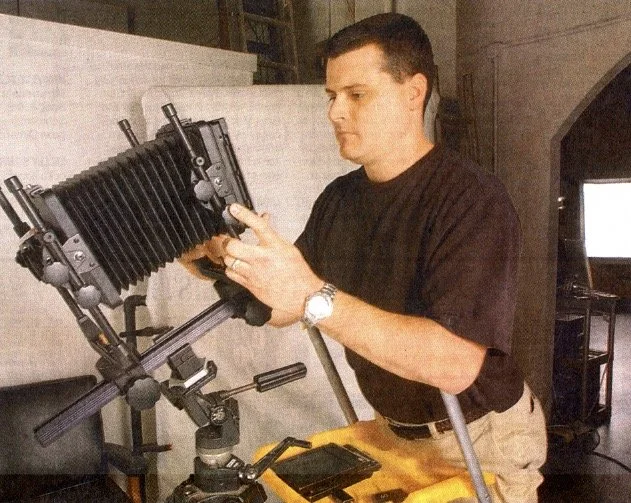
“It definitely hasn’t saved me any time,” he said.
The image manipulation allowed by computers has revolutionized commercial photography, Mike Potthast said. It can literally bring out the sun in a photo shot on a cloudy day.
“Pretty much anything you see in an advertisement is not actually how it was shot in real life,” he said.
The photography business has changed in other ways in the last decades, the Potthasts said.
In his early days, almost all the work involved still photography, Mike Potthast said. Now about 40 percent of his business is video photography, such as weddings and special events.
“Some of the principles, such as lighting and composition, are the same.”
Mike Potthast took that part of the business a step further into commercial video production, which few traditional photo studios handle, he said.
Under his direction, Potthast Studios has made television commercials for local companies for the area’s cable networks and educational and training films for clients such as Winter Haven Hospital.
“One of the most effective ways you have to keep pace is with video,” Potthast said of his educational/training productions.
Other aspects of the business have not changed, the Potthasts said. Family portraits, high school graduation photos and other consumer work still drive a big part of the business.
Product diversity is an important part of the company’s success because the commercial and consumer sides reinforce each other, Mike Potthast said.
Portrait clients have been pleased enough with the studio’s work that they hired Potthast to do commercial work for their companies, he said. And the commercial work has generated portrait customers.
“In an area like Winter Haven, you want to diversify,” Potthast said. “You want some crossover.”
Other services Potthast offers include photo restoration and picture matting and framing.
And within the past year, Potthast has taken diversity beyond photography, selling custom-made jewelry through his wife, Amy.
That kind of business diversity, as well as artistic talent, runs through the generations.
William A. Potthast, Bill’s grandfather, emigrated to Baltimore around 1890 from Borgholz, Germany, where his family ran a successful furniture manufacturing business, Bill Potthast said.
He came to America with $1,000 in German marks, which his father gave him after rejecting William Potthast’s plans for expanding the business in Germany, Bill Potthast said. He challenged his son to take his bright ideas to the United States.
The grandfather did so and built a successful furniture business in Baltimore, he said. Along the way, he became interested in photography during its infancy.
William Potthast passed along his interest in photography to his son, George, who only dabbled in it. Bill Potthast was a dabbler too, until a friend invited him into a darkroom shortly after he moved to Winter Haven in 1965.
“The first time I saw a picture come up (in the developing tray), I said, ‘That’s what I want to do,’” Bill Potthast said.
Potthast quit his job as an insurance salesman and joined the photography staff at the News Chief, he said. Some 18 months later he started Potthast Studios as a part-time business, and it became full time in 1968.
In addition to the family members, Potthast Studios employs part-time and full-time secretaries. Mike Potthast declined to disclose annual revenues, but he said they grew 30 percent last year.