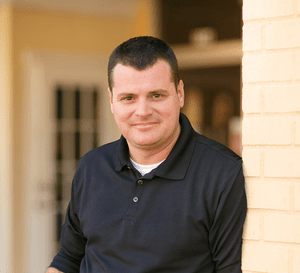
He Spent a lifetime capturing what lights people up.
Thomas R. Oldt, Special to The Ledger
Jan. 4, 2020
Around photographic studios from infancy, and a professional from a young age,
Mike Potthast is an artist who has made a name for himself over the years.
From the local gentry to sports stars like Shaquille O’Neill and Roger Clemons, to
politicians such as Jeb Bush and Adam Putnam, to media bigwigs like Willard
Scott and actors like Jane Seymour, to ordinary folks who want their families to
be captured by an extraordinary talent, he has built a reputation as a virtuoso of
the lens.
He comes to the aesthetic side of the business naturally. His father, Bill,
established Potthast Studios in Winter Haven in the early 1960s. His grandfather
was a photographer in the U.S. Army during World War I. And his great-
grandfather was a preeminent Baltimore furniture maker whose creations were
delivered to 1600 Pennsylvania Ave. and are believed to still be among the White
House furnishings.
Potthast has shot people and scenes while riding on the back of motorcycles,
drifting in hot air balloons, dangling from 250-foot-tall cranes, aloft in fixed wing
airplanes and helicopters, on pristine beaches, surrounded by cattle in
backwoods settings, situated among dogs, cats and assorted wildlife, in studios
with restless kids and petulant teenagers – and just about everywhere else you
can imagine. The 47-year-old Potthast may have seen it all, but like the
conscientious Eagle Scout he was in his youth, he’s not telling all.
Q. Did you mostly learn from your father?
A. I grew up watching my dad work in the studio. He established the business in
1964 and stayed active in until the time I took over in 2004. I often worked with
him late at night back in the darkroom days. He would be here shooting in the
day and at night I would come back with him and we’d be upstairs printing until
he’d take me back home around 10 — I was still in elementary school – and it
would not be unusual for him to come back to the studio and be working until 2
in the morning. I learned the darkroom side from him, how to work with people
on the portrait side, techniques, composition and especially lighting. That’s what
photography is – capturing light.
Q. Did you ever receive formal training?
A. I went to the Southeast Center for Photographic Studies at Daytona State, one
of the top five photography schools in the country at the time I was there. I
received formal training in commercial photography there but the real hands-on
came from working with my dad.
Q. How long have you been in this location?
A. Dad bought this building in 1972. When it was built in 1924, the downstairs
part was Levy’s, a department store. The upstairs was a boarding house, a hotel
type thing. People would get off the train downtown, stay here for a few nights or
a week while they got their feet on the ground, then move on. Eventually it
became May’s Dress Shop in the 1950s.
Q. Your clients are pretty much a who’s who of Polk County. How did
that come about?
A. My dad established the name. You do a good job for people and it seems to
take care of itself — one job leads to the next. You have to always be creative —
that’s the tough part. Everybody sees everybody else’s work so you have to find
something a little bit different to do with each person and that’s when you start to
look into their personalities and find something that gives that person or family
special character. You can’t just template the photography style.
Q. What kind of locations to you like to use?
A. Different families fit different styles. My instinct is to find a setting that means
something to that family – something totally unique like a house or some
property that holds meaning for them, like a citrus grove or cattle ranch. That’s
what a portrait is about — telling a story about that family at a certain time of
their life, and capturing that moment. I try to find a comfort level with a client
before the camera shows up. Sometimes a simple studio setting can be pretty
awesome if you have a good read on that person and their personality. Sometimes
it is the simplest way of telling a person’s story.
Q. Aren’t you also telling a story with commercial photography?
A. Absolutely. Commercial work usually takes you outside on location. If I’m in
the studio for a week, I’m ready to get outside. If I’m outside for a week —
especially in July — I’m ready to get back in the studio. Portrait work and
commercial work are kind of the same. You’re usually dealing with people — a
builder, a lawyer, a doctor — so it’s basically a portrait you’re creating. My
comfort level and what I really like to do is work with people.
Q. What do you like least about what you do?
A. I better be careful with this one. I grew doing this. I know my job really well —
I know what fits people really well, what works compositionally, what good
lighting is, what a good setting is. I know all that, but if my client doesn't like the
job it doesn't matter. And that happens. A client has an idea in his or her head
what they want, but if you’re not on the same page with them, if what I’ve
captured is not what they want, it doesn’t matter what I’ve learned and what I
know. At the end of the day your client is the one who determines if you’re doing
your job, and that’s the tough part sometimes.
Q. What do you like most about your work?
A. What I like about photography is that it’s mixing science and technical skills
with art, and I love both sides of that. I love the computer and digital side. I grew
up playing with electronics. The art side came later. Photography is a good mix of
both.
Q. What equipment do you prefer, and how has it evolved?
A. It’s all digital, with the exception of a large format four-by-five camera I pull
out maybe once a year. Film is a cool medium – it slows you down. You get one
shot every few minutes. There’s an essence to film, when you’re shooting in that
format, that is really beautiful. With digitals you can shoot all you want.
I often use a medium-format digital, a Hasselblad, which is a higher resolution
camera with a bigger sensor. Those have really come along. The improvements
are basically in quality and color depth – the number of stops you can capture.
There are about 16 layers of light in photography. On film you can capture only
about four or five layers of light. The medium format captures 12 to 15. In outdoor photography, the highlights are just as good as the deepest shadows. It’s
where you really get dynamic range. Where the more professional cameras are
really making inroads is in the quality of the lenses and the dynamic range.
Q. What’s the most unusual photo shoot you’ve been asked to do?
A. We were asked to shoot a nude outdoor wedding once. I don’t know if it was
another photographer playing a joke on me — it could have been — but I think it
was a real request. I just don’t think I was ready for a nude wedding outdoors and
all the light you get with that. I just wasn’t going there. I’ll shoot a lot of stuff. I’ve
shot nudes, but not nude weddings.
There’s another one, not unusual but really cool. I was able to do a photo-shoot
ride with Lance Armstrong. I was riding on the back of a motorcycle and he was
riding his bike for the Iron Man. I did 60 miles with him, so close I could I have
grabbed him. I had a driver who was half my size and we went down twice,
skinned up, but I was on a high on that shoot.
Q. Are animals and children difficult subjects to work with, and what
kinds of situations have you encountered that required workarounds?
A. We have a knack with animals. We’ve done enough of them and we know how
to handle them. My assistant Beverly does a great job. She loves animals. An
assistant is absolutely key, making little noises and getting their attention.
Kids are tough. A young kid — babies, 1- or 2-year-olds – will generally give you
20 minutes, tops, with rare, rare exceptions. When I get a kid in here, I’m moving
quick, trying to do it within five minutes. What gets them is the flash going off.
That pop of light agitates them. And you’ve usually got mom and dad back there
making noises and it’s a big fiasco, but if you can settle them down, that helps a
bit.
But if you get a kid who’s not going to work with you, he’s not going to work with
you. There’s nothing you can do. You can duct tape him to the floor and it still
won’t work. We do a lot of head swaps when it comes to families with kids. If we
take enough shots, we’ll eventually have one good face we can use on other shots.