On-Location Studio Preparation Guide
Space & Setup Guidelines
To help us create consistent, professional headshots at your location, please reserve an appropriate area for our temporary photography studio. The following guidelines will help us work efficiently and produce the best possible results. As these recommendations below are best, we understand some spaces can be tight and we know how to adjust to many situations.
Recommended Space
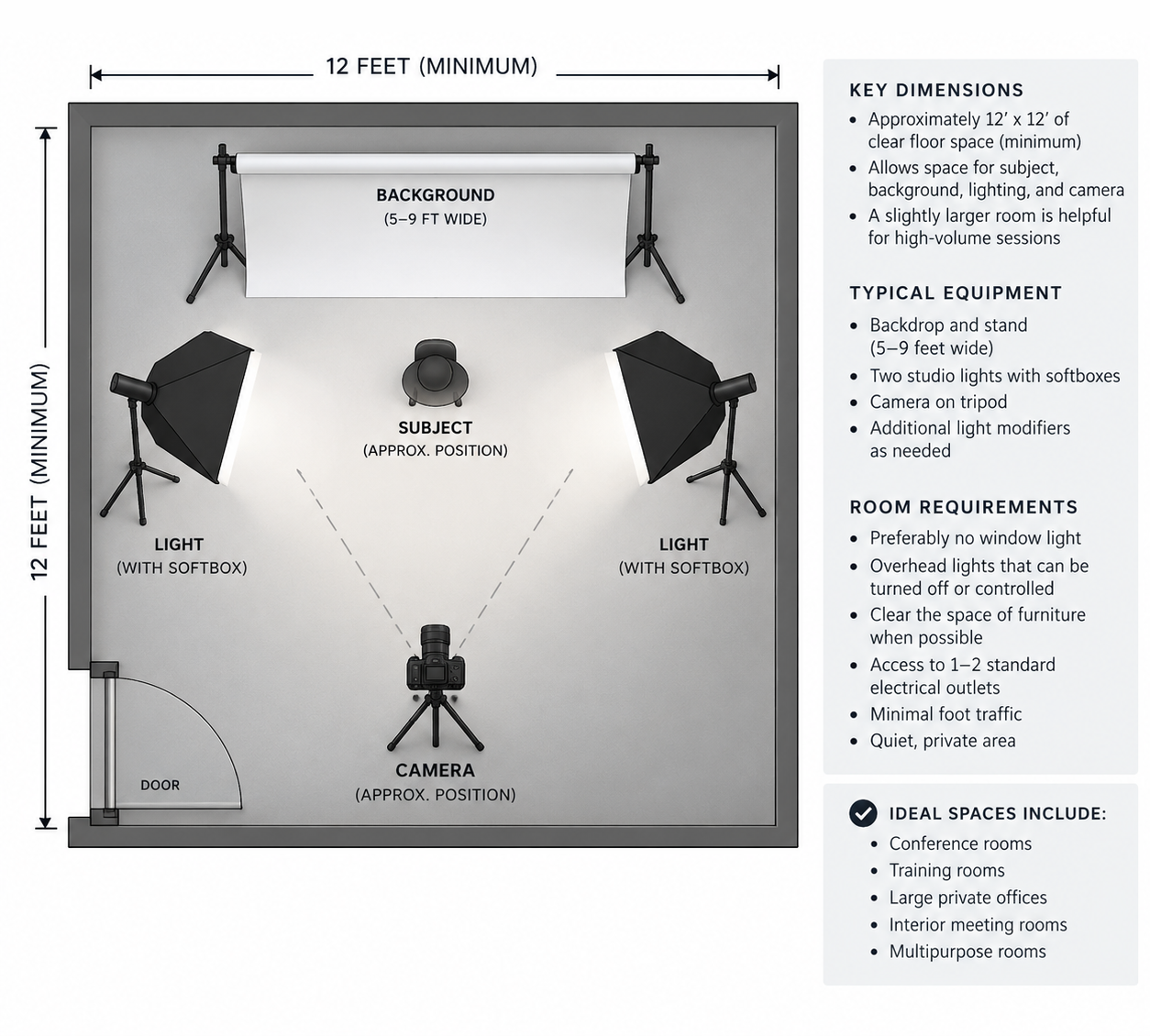
Approximately 12' x 12' of clear floor space is ideal for our photography setup.
A slightly larger room is always helpful, particularly when photographing a larger number of employees.
The space should be cleared of tables, chairs, boxes, and other furniture whenever possible.
We need enough distance between the photographer, subject, background, and lighting equipment.
Lighting
A room with little or no window light is preferred.
Interior rooms, conference rooms, training rooms, or similar spaces generally work very well.
If the room has windows, blinds or shades that can be controlled are helpful.
We prefer overhead lighting that can be turned off or controlled during the photography session.
We bring our own professional studio lighting and do not rely on the room's existing lighting.
Electrical
If you're scheduled for 2 to 3 hours, electrical outlets are not a huge concern. If the shoot is a little longer, we may need to charge batteries and laptops throughout the day.
Room & Background Considerations
High ceilings are helpful but not required.
Please avoid extremely small offices, narrow hallways, or rooms with fixed conference tables that cannot be moved.
An area with minimal foot traffic is preferable so employees can be photographed without interruption or feeling observed.
Employee Waiting & Staging Area
If several people are being photographed, having a small waiting or staging area nearby is very helpful.
We recommend sending employees to the photography area according to a scheduled time or in small groups rather than having everyone arrive at once.
A nearby restroom or mirror is helpful for last-minute hair, clothing, and appearance checks.
Access & Setup
Please allow us access to the photography area before the first scheduled headshot so we can unload, set up, test lighting, and prepare the studio. Typically 20 minutes is plenty of time.
For certain shoots, we can take advantage of using online tools during photo selections. If you have available Wi-Fi please let us know.
Easy access for unloading equipment is appreciated. Please let us know about elevators, stairs, loading docks, parking restrictions, security checkpoints, or special building-access requirements.
Once the studio is set up, we prefer to leave the equipment in place until all scheduled photography is complete.
Ideal Locations
Spaces that usually work particularly well include:
Conference rooms
Training rooms
Large private offices
Interior meeting rooms
Empty office suites
Multipurpose rooms
Lobbies or reception areas during low-traffic periods
Before We Arrive
If you are unsure whether a particular room will work, feel free to send us a few cell-phone photos of the space ahead of time. We are happy to review it and make recommendations before the photography day.
Our goal is to make the process easy for your staff while creating professional, consistent headshots that represent your organization well.
Typical Setup Diagram
What to Wear for Your Business Headshot
The best clothing for a professional headshot is clean, well-fitting, and consistent with how you normally present yourself to clients or colleagues. In most cases, simple is better. The goal is for the photograph to draw attention to you, not your clothing.
Formal Business Attire
For a more traditional or executive look, consider:
A well-fitted suit or sport coat
Solid or subtly patterned dress shirts or blouses
Neutral or classic colors such as navy, charcoal, gray, black, white, cream, or soft blue
Simple ties with understated patterns or textures
Jackets that fit comfortably through the shoulders
Simple, professional jewelry and accessories
Clothing that reflects what you would normally wear for an important client meeting or presentation
If you normally wear a jacket or blazer professionally, we usually recommend bringing one. It gives us the option of creating both a more formal portrait and a slightly more relaxed version.
Business Casual Attire
Business casual headshots can feel professional while also appearing more approachable and relaxed.
Good choices include:
Polo shirts
Button-down shirts
Blouses or simple tops
Sweaters or quarter-zips
Casual sport coats or blazers
Solid-color dresses
Clean, structured clothing without distracting graphics or patterns
Business casual clothing often works especially well for companies that want their team photographs to feel friendly, modern, and approachable.
Colors That Photograph Well
Solid colors are usually the safest choice.
Consider:
Navy
Medium to dark blue
Charcoal
Gray
Black
Cream
Burgundy
Deep green
Soft earth tones
Muted blues and pastels
Medium and darker tones tend to photograph particularly well and help keep attention on the face.
What to Avoid
Whenever possible, avoid:
Very busy patterns
Extremely small checks or stripes
Large logos or graphics
Neon or extremely bright colors
Clothing with distracting text
Shirts or jackets that are noticeably too large or too tight
Wrinkled clothing
Very shiny fabrics
Accessories or jewelry that overpower the face
Clothing that you would not normally wear in your professional environment
Very small patterns can sometimes create distracting visual effects when photographed, so larger, simpler patterns are generally preferable.
Bring an Extra Option
If you're unsure, bring an additional shirt, blouse, jacket, or top.
Having a second option allows us to quickly decide what photographs best with the background and lighting. In many cases, simply adding or removing a jacket can create two noticeably different looks.
A Few Final Tips
Make sure clothing is clean and pressed before arriving.
Check collars and jacket lapels before your session.
If wearing a tie, have it tied and adjusted before coming to the photography area.
Keep jewelry and accessories simple unless they are an important part of your personal style.
Consider bringing a comb, brush, or small grooming kit for last-minute adjustments.
If you wear glasses regularly, we generally recommend wearing them for your portrait.
Most importantly, choose clothing that makes you feel comfortable and confident.
When in doubt, choose something simple, professional, and authentic to how you normally present yourself.